Land Mammals
Capuchin monkeys
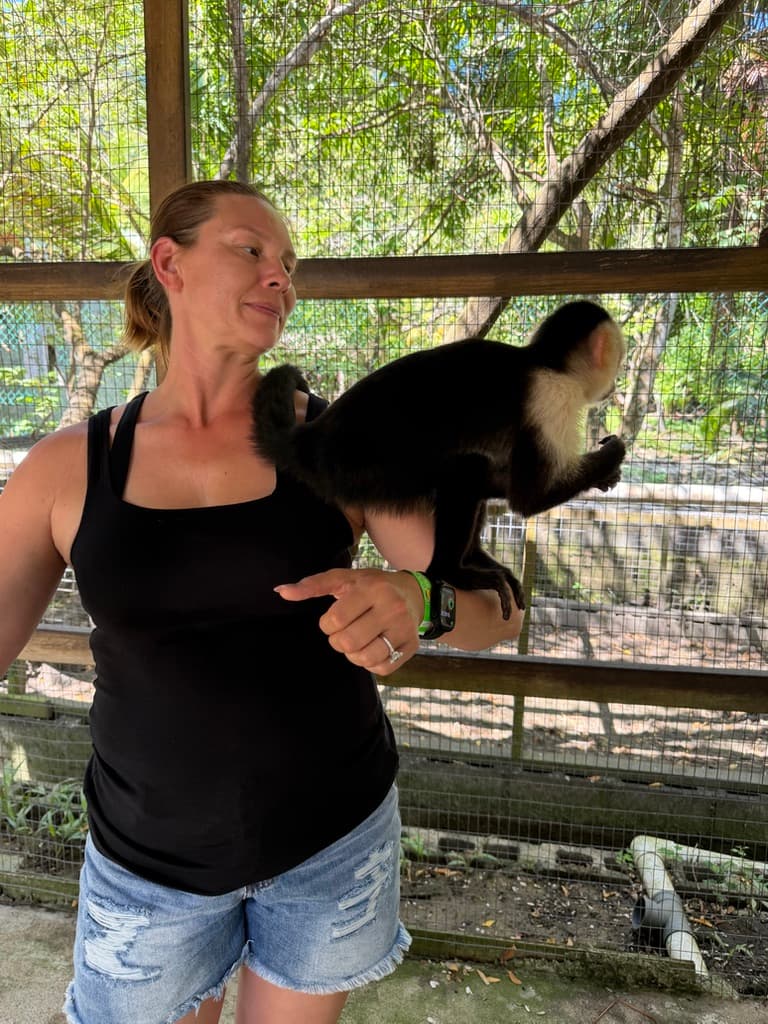
Jennifer encountered capuchin monkeys at Mayan Jungle Canopy - Victor Bodden's Monkey & Sloth Sanctuary in Sandy Bay, Roatán, Honduras.
Species overview
Capuchins are New World primates. The exact capuchin species at the attraction has not been confirmed, so this record does not make a narrower identification.
Destinations where they may be seen
Wild capuchin species occur in parts of Central and South America. Jennifer's documented encounter was in a captive setting in Roatán, Honduras.
Best viewing considerations
For wild viewing, prioritize protected habitat, qualified local guides, no feeding, and no contact. For managed attractions, independently examine animal origin, enclosure, veterinary care, handling, and conservation claims.
Where Jennifer encountered them
Jennifer encountered capuchin monkeys at Mayan Jungle Canopy - Victor Bodden's Monkey & Sloth Sanctuary in Sandy Bay, Roatán, Honduras.
Ethical viewing distance
This was a managed-contact setting, not a model for approaching wild primates. Wild-viewing distance must come from the applicable park or authority.
Operator or setting
Managed, captive-contact tourist attraction. The operator's current site advertises animal interactions, but BVG has not found a current independent welfare audit or government inspection record for this specific facility. No ethical endorsement is being made.
Seasonal considerations
Facility access may be year-round, but that does not establish animal-welfare quality or make the experience appropriate.
Photography guidance
A photograph showing direct contact must be labeled as managed or captive and must never be used to imply that touching wild primates is appropriate.
Safety and biosecurity guidance
Direct contact can create bite, scratch, disease, and animal-welfare risks. Follow current veterinary, public-health, and facility rules.
What is never guaranteed
Animal contact, behavior, and photo opportunities should never be promised.
Conservation context
A conservation claim requires evidence about licensing, animal origin, welfare practices, and how money supports credible conservation work.
Captive-versus-wild disclosure
Captive-versus-wild disclosure: captive animals in an enclosed, human-managed contact setting. This was not a wild primate encounter.
Gallery, videos, and related reading
Gallery: The verified photograph for this encounter is shown on this page.
Videos: No related BVG video is currently linked to this record.
Related destination: No matching BVG destination page is currently published.
Related article: No related BVG article is currently published.