Distance is local
There is no single safe distance for every animal or destination. Follow the controlling park, guide, vessel, or conservation authority, and move back if an animal reacts to you.
Wildlife
Discover the wildlife Jennifer has encountered around the world. Each story shares where she saw it, how travelers can observe responsibly, what to ask an operator, and why every sighting remains a matter of chance.
These four paths keep the main navigation simple. Polar, safari, island, and rainforest encounters can appear across more than one group as the library grows.
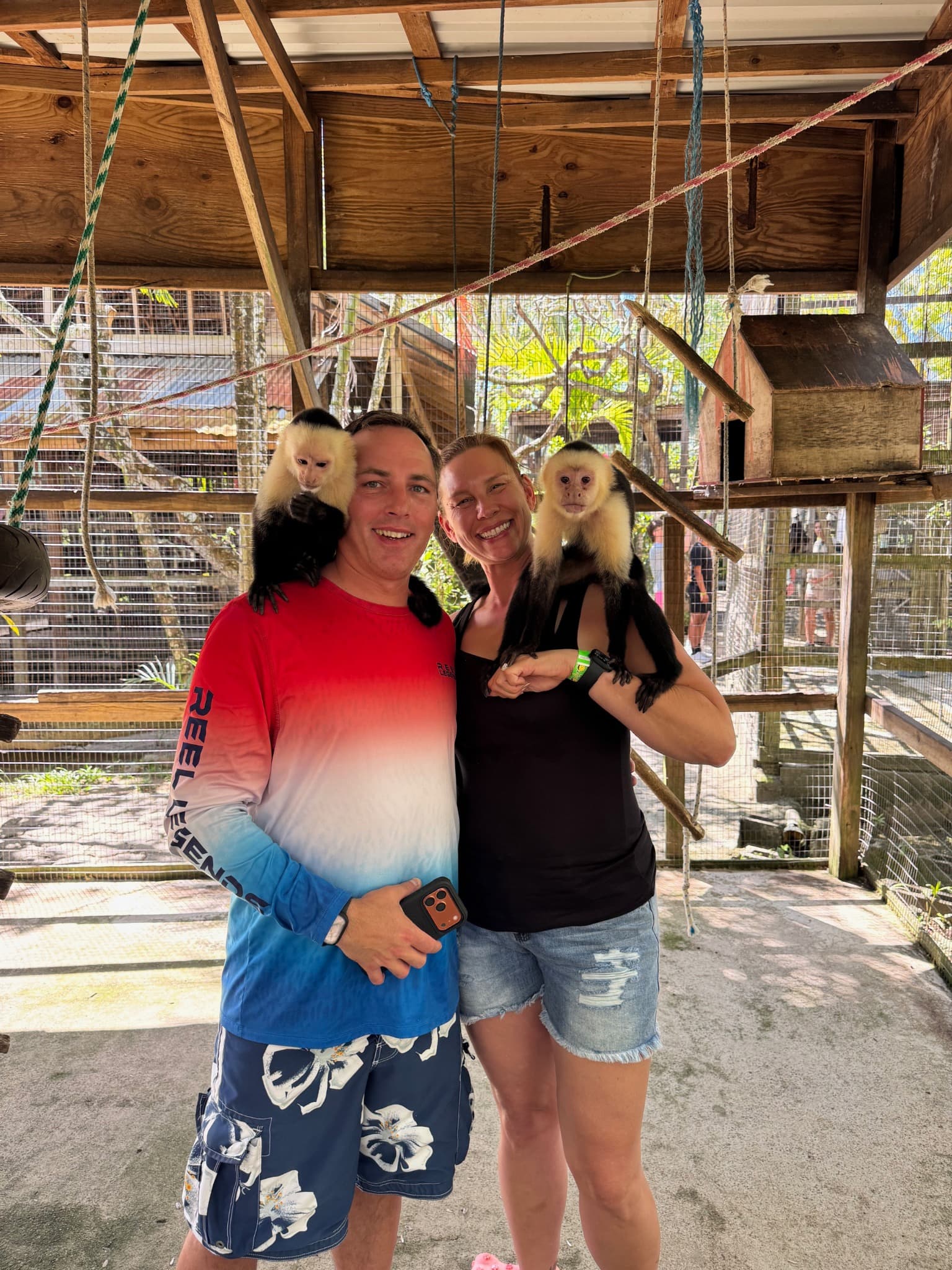
Primates and other land mammals encountered in forests, parks, islands, and future safari stories.
Explore this group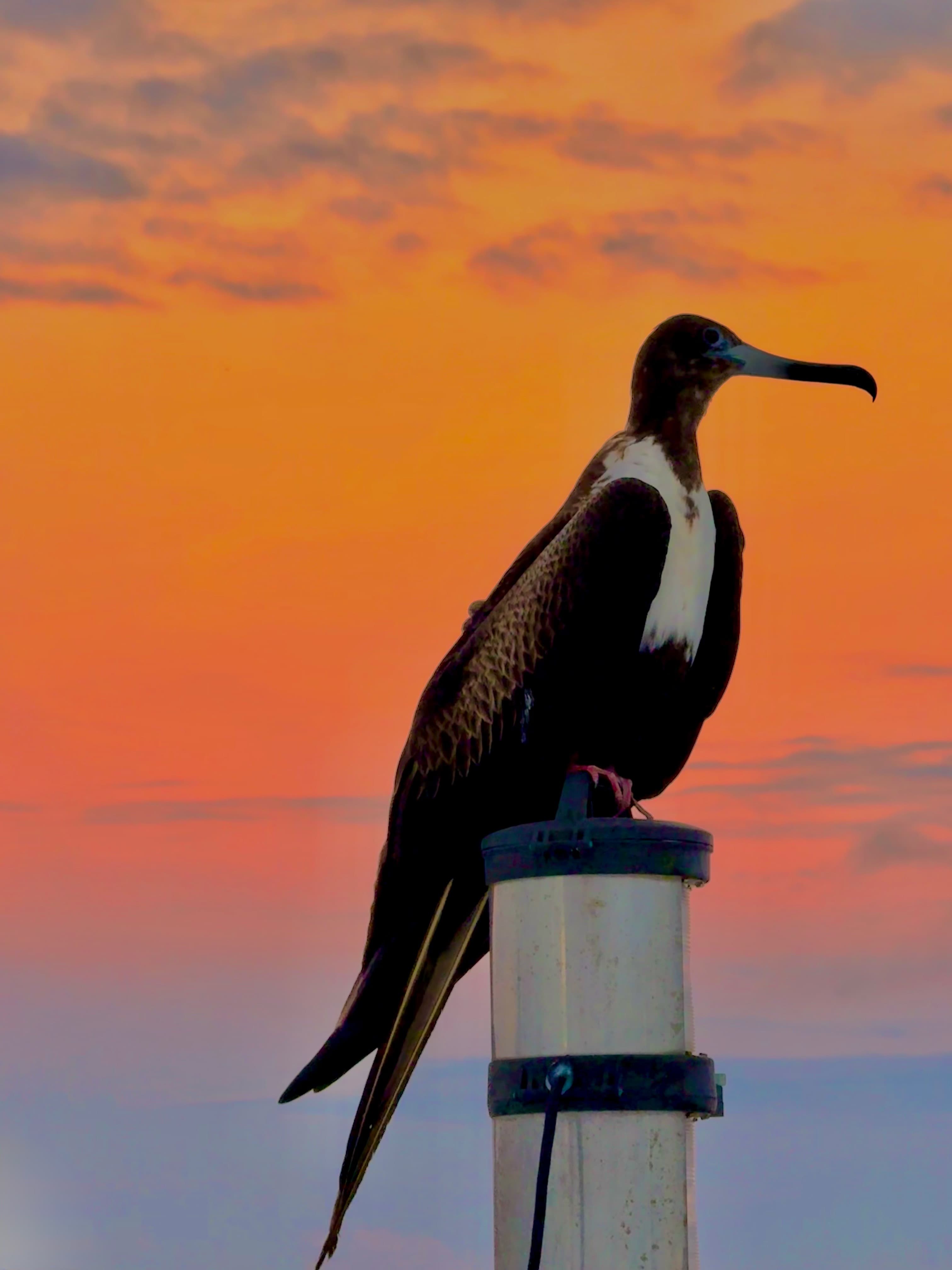
Penguins, macaws, flamingos, seabirds, and the places where patience rewards the watcher.
Explore this group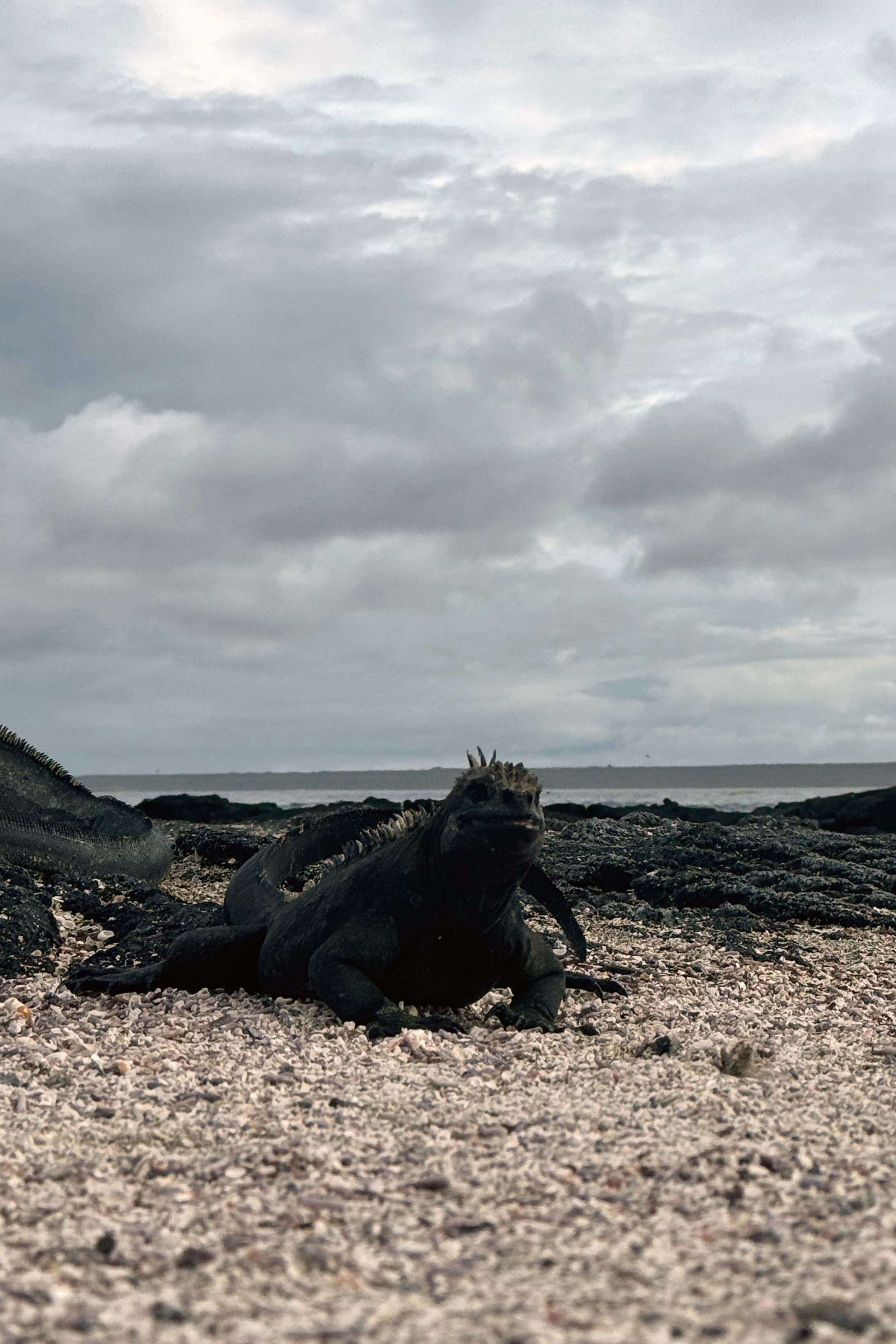
Giant tortoises, marine iguanas, and encounters shaped by habitat, distance, and local rules.
Explore this group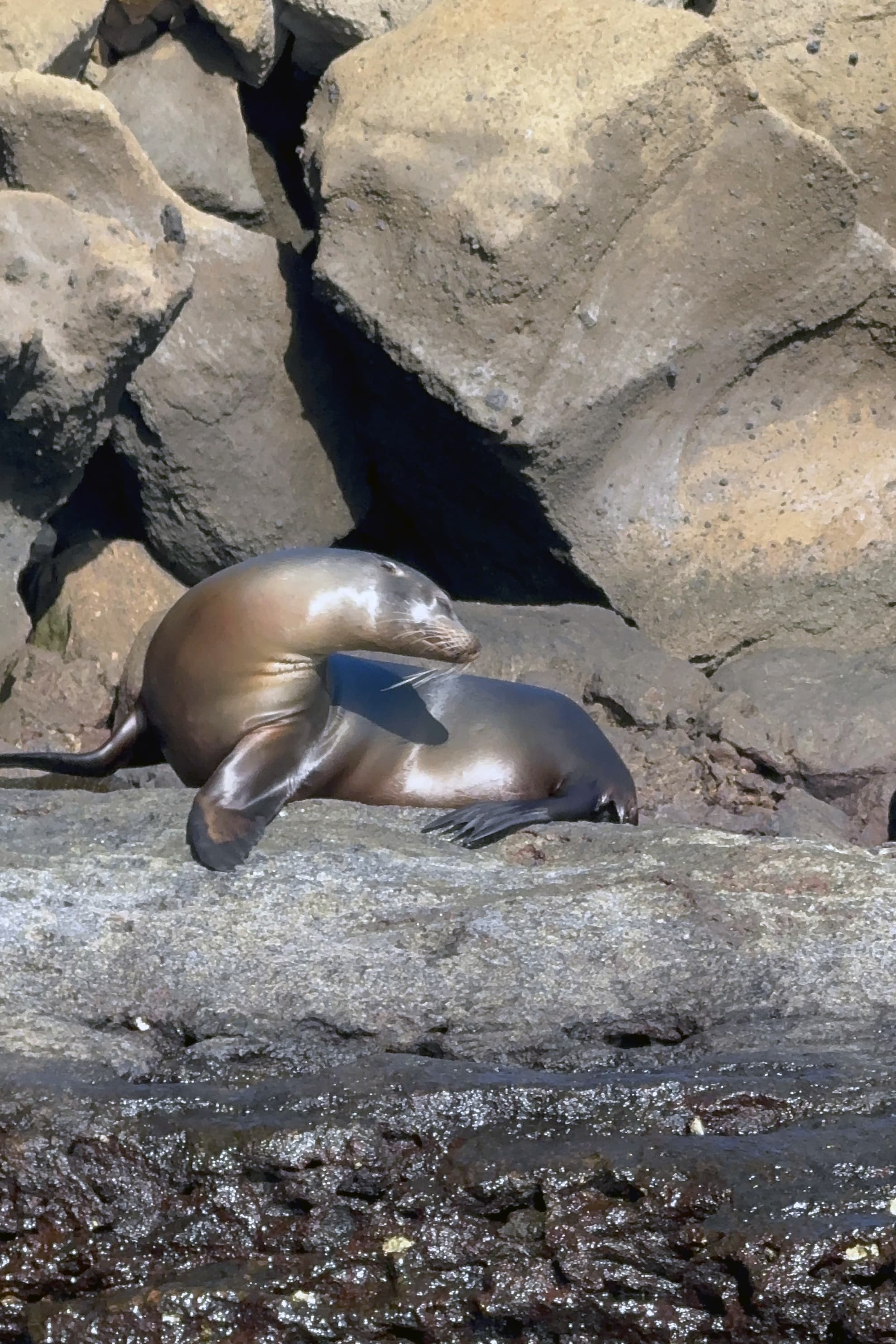
Whales, dolphins, seals, sharks, fish, reef life, and the realities of wildlife encounters on and below the water.
Explore this groupEthical wildlife travel
Responsible viewing protects the animal, the traveler, and the possibility that future visitors can witness natural behavior. Local rules always take priority over generalized advice.
Never guaranteed: the species, number of animals, proximity, behavior, weather, water clarity, landing, or photograph.
There is no single safe distance for every animal or destination. Follow the controlling park, guide, vessel, or conservation authority, and move back if an animal reacts to you.
Wild, captive, sanctuary, rehabilitation, and managed encounters are not interchangeable. BVG will identify the setting when it is confirmed instead of letting a photograph imply it.
Look for guides who explain and enforce local rules, limit disturbance, avoid feeding or baiting, manage group behavior, and put the animal's welfare before a promised photograph.
Season, weather, migration, visibility, and animal behavior can all change the experience. Ethical operators should not pressure animals to manufacture a sighting.
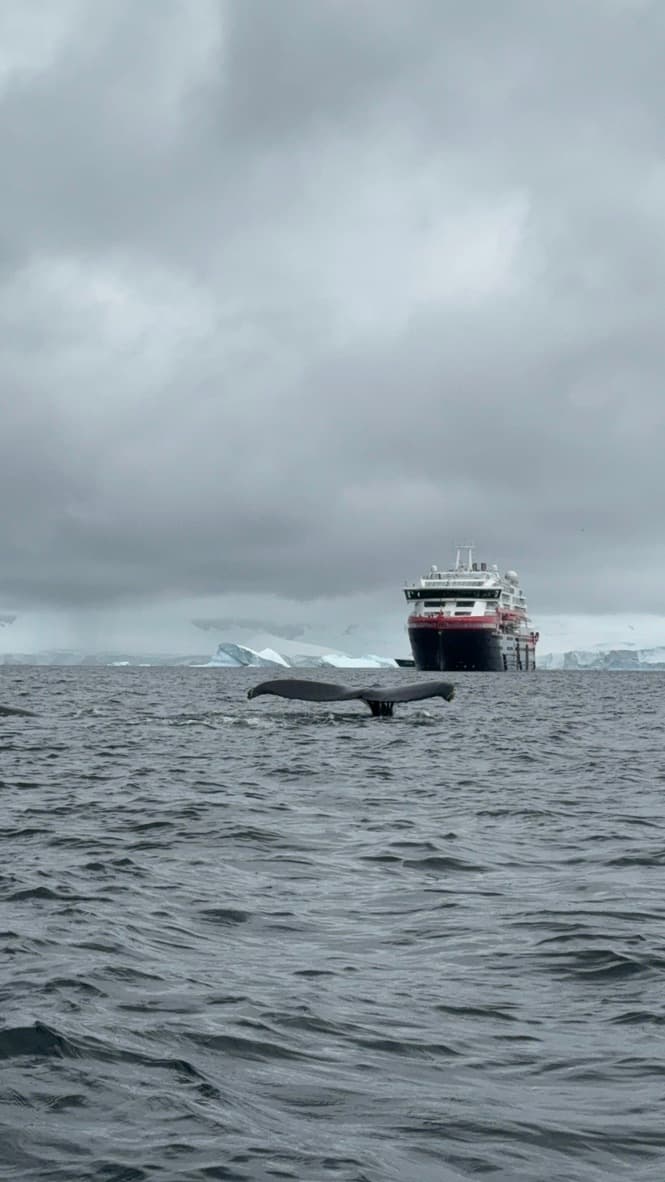
Wildlife photography
From Jennifer's travels
Each published encounter should explain what Jennifer saw, where she saw it, whether the setting was wild or managed, and which details a future traveler must verify.
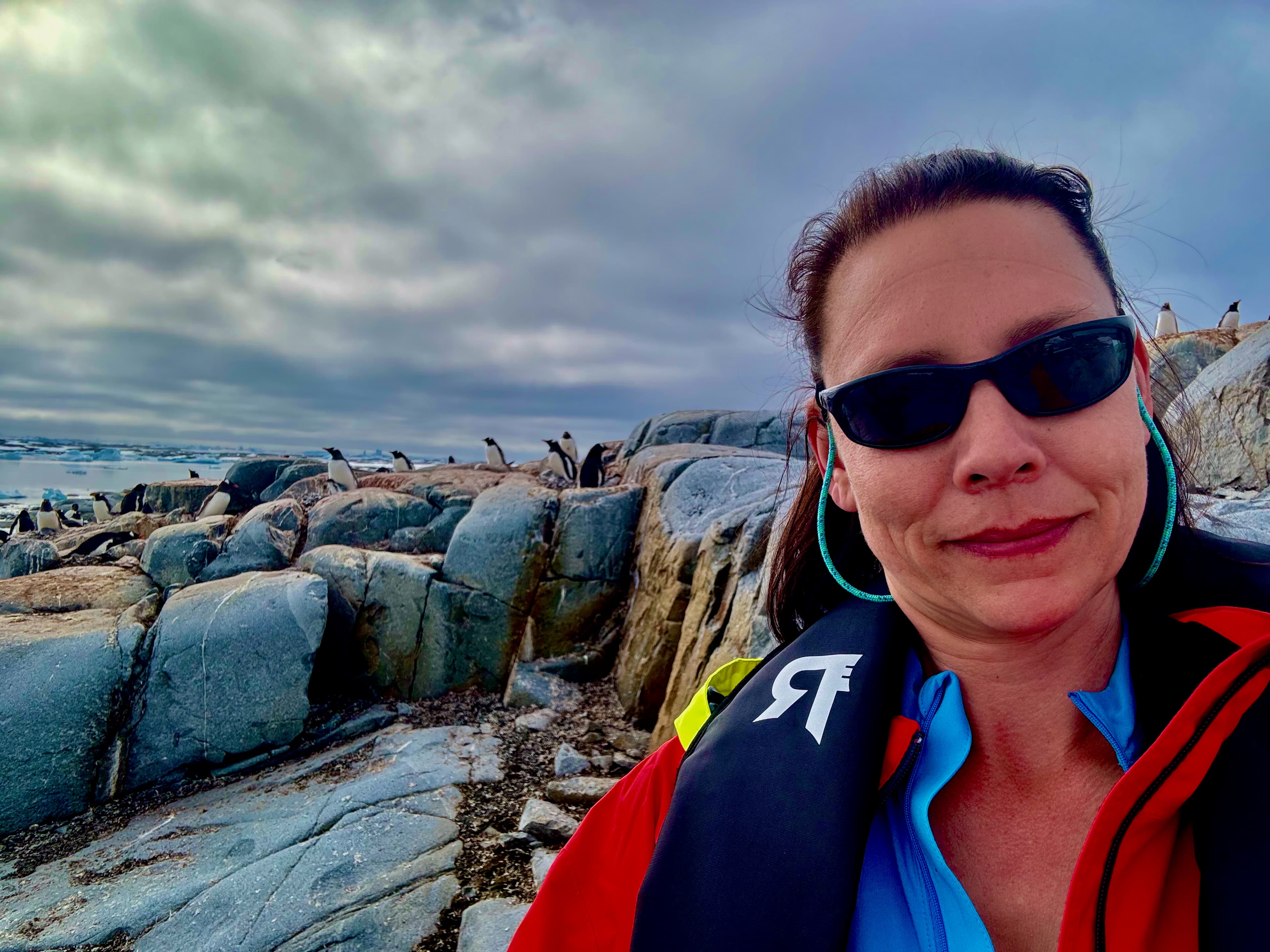
Wild polar encounter
Jennifer's photograph documents a shoreline encounter at Hovgaard Island during her Antarctic expedition. Expedition briefings, landing conditions, biosecurity requirements, and wildlife instructions remain controlling on every visit.
Setting: wild. Individual sightings and landing access are not guaranteed.
Photo by Jennifer at Hovgaard Island
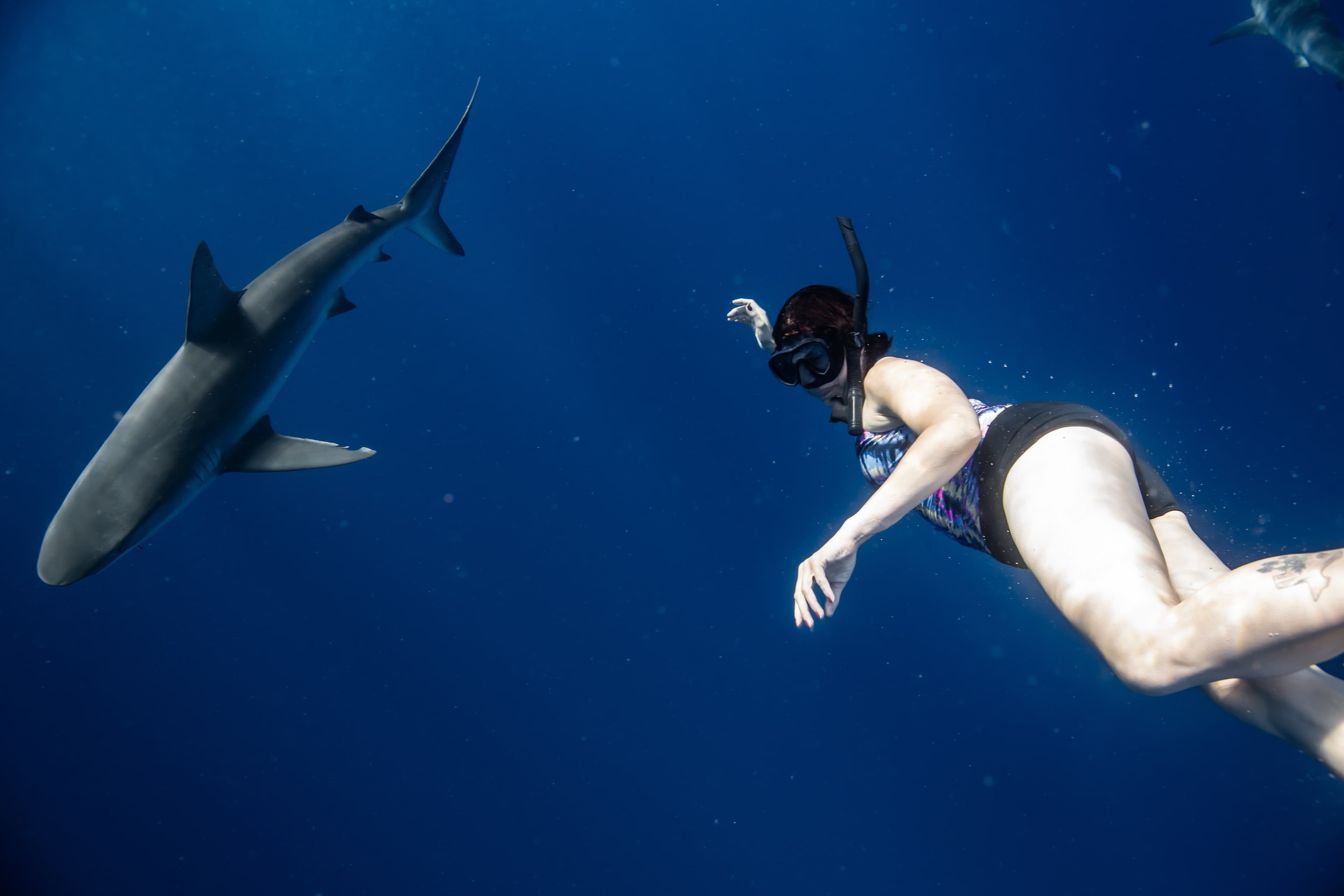
Wild open-water encounter
Jennifer's published Oahu story identifies an open-water snorkel with lemon sharks through Hawaii Adventure Diving. That records her experience; it is not a blanket endorsement or a promise of the same conditions.
Setting: wild, open water. Operator and current practices must be rechecked before booking.
Read Jennifer's related story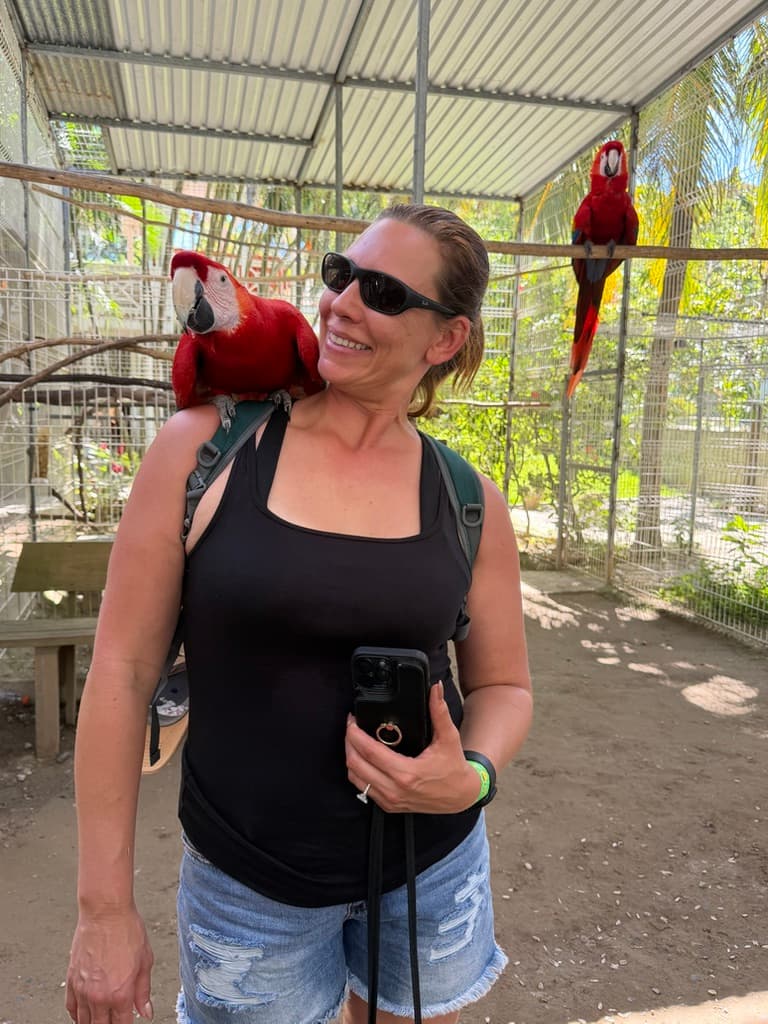
Managed encounter disclosure
Jennifer encountered this macaw during the same visit to Mayan Jungle Canopy - Victor Bodden's Monkey & Sloth Sanctuary in Sandy Bay, Roatán. The photograph documents her experience but is not an ethical endorsement of the attraction.
Setting: captive animal in an enclosed, human-managed contact attraction; not a wild encounter.
Photo by Kevin
View the attraction's official site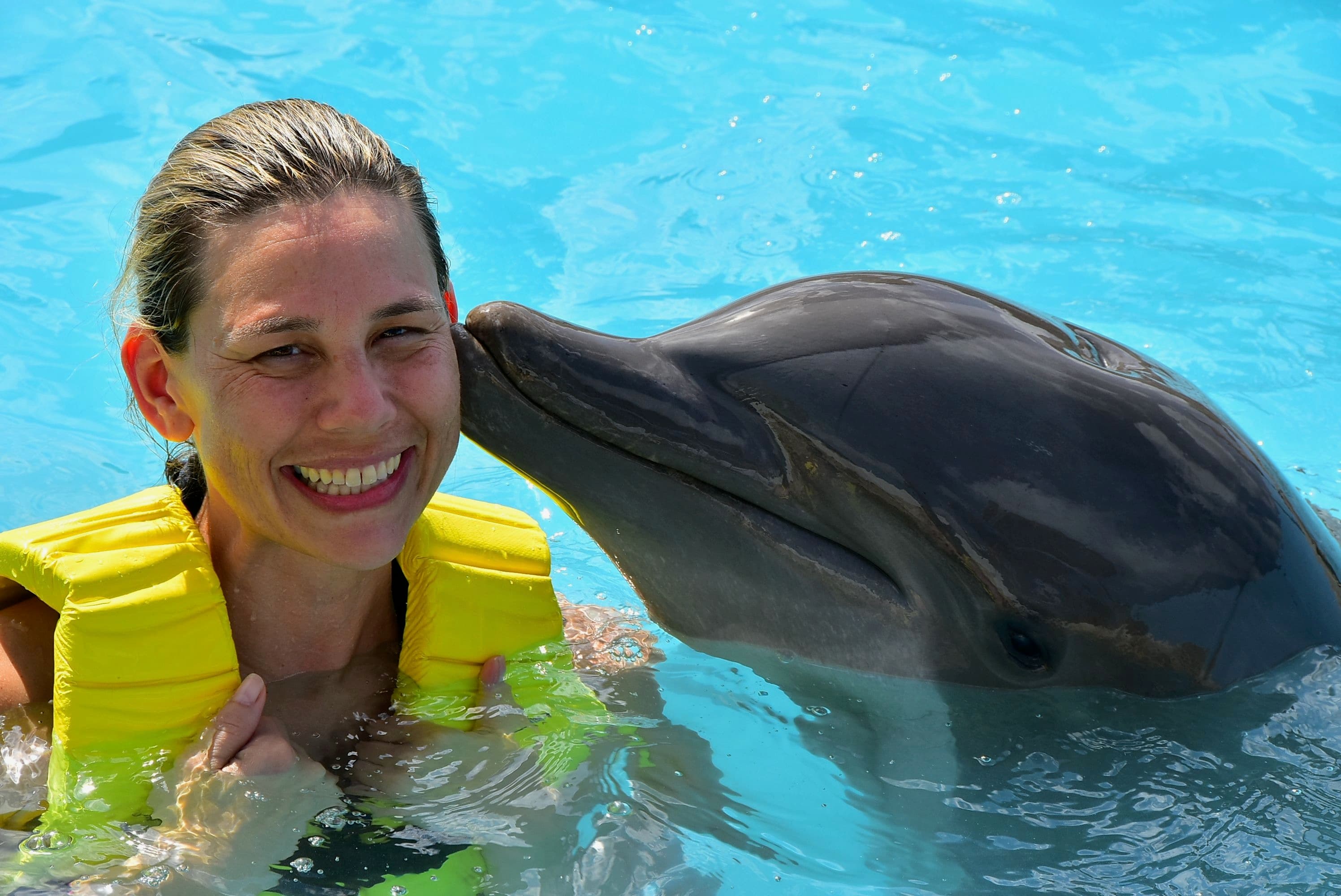
Managed encounter disclosure
Jennifer participated in a supervised bottlenose dolphin encounter at Dolphinaris Cozumel. An employee took the photograph.
Setting: managed dolphin-contact excursion at Dolphinaris Cozumel. Current operating practices and legal compliance should be checked before booking.
Photo by an unidentified excursion employee
Wild island encounter
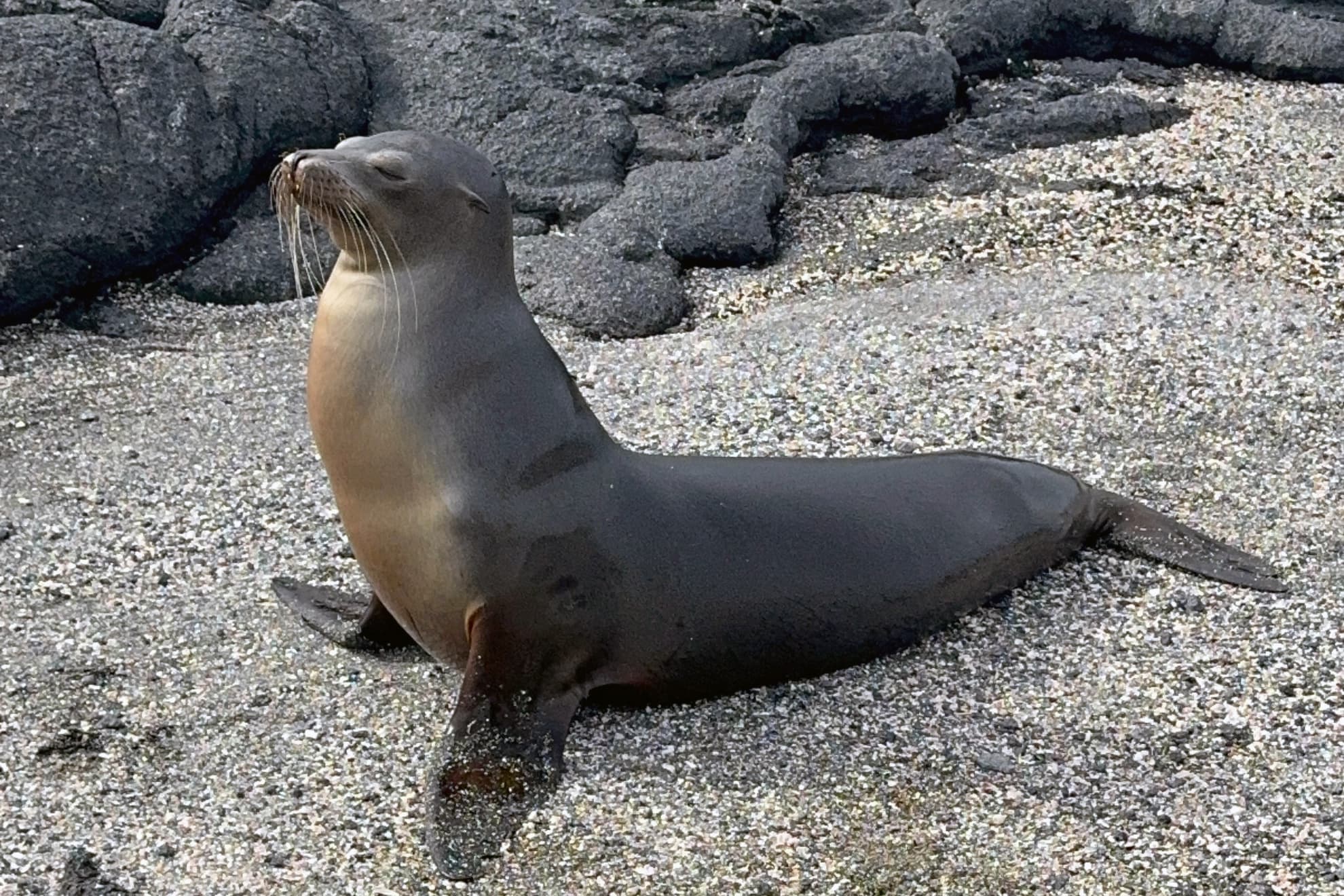
Jennifer encountered and photographed this Galápagos sea lion on Fernandina Island. Visitors must follow the Galápagos National Park's current guide, trail, and wildlife-distance rules.
Setting: wild. The animal's presence, position, behavior, and proximity are never guaranteed.
Photo by Jennifer
Wild polar encounter
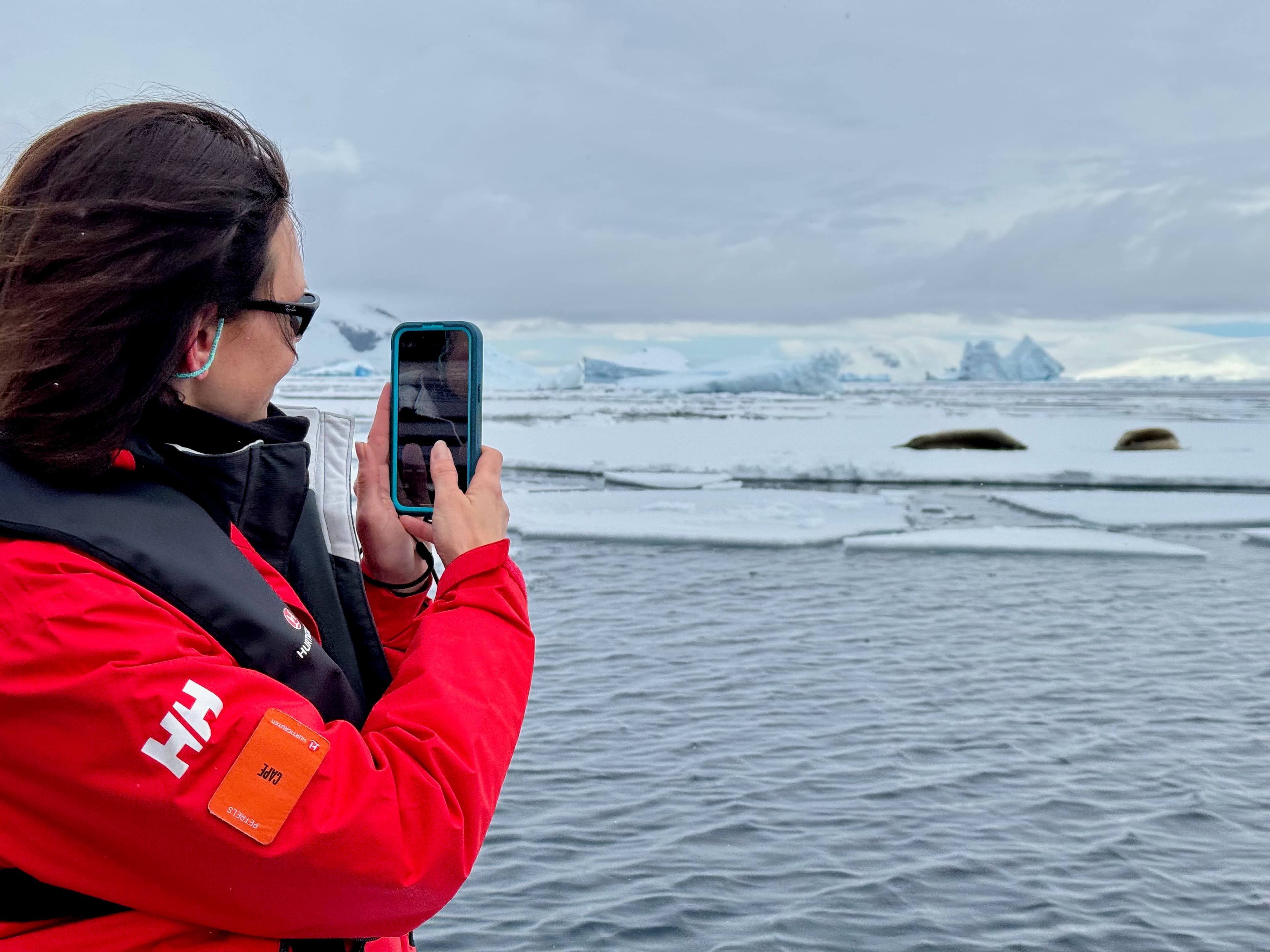
Jennifer encountered these seals during an Antarctic Peninsula expedition. The specific seal species and landing site have not been confirmed, so the photograph is not labeled more narrowly.
Setting: wild. Expedition access, sightings, species, behavior, and viewing conditions are never guaranteed.
Photo by April
Safety and seasons
Breeding, nesting, migration, feeding, weather, disease controls, water conditions, and park operations can all change access and safe behavior. Follow current local authorities and trained guides; never rely on a distance copied from a different destination.
Conservation context
Before booking, look for transparent animal-welfare practices, local rules, guide training, group limits, and a credible explanation of how fees or operations support habitat, research, rescue, or local stewardship. Marketing language alone is not proof of conservation benefit.
These sources support the general guidance above. Destination- and species-specific rules should be cited on individual encounter pages and checked again before travel.