What I Saw at Auschwitz-Birkenau—and What It Made Me Feel
The preserved belongings, barracks, ruins, and railway car made the history physical—and impossible to hold at a distance.
Our day began when AB Everest Travel collected us from the InterContinental Warsaw at 7 a.m. and ended when we returned around 7 p.m. The driver handled the long transfer and basic schedule, then handed us to memorial guides at Auschwitz I and Auschwitz II-Birkenau. I knew the day would be difficult.
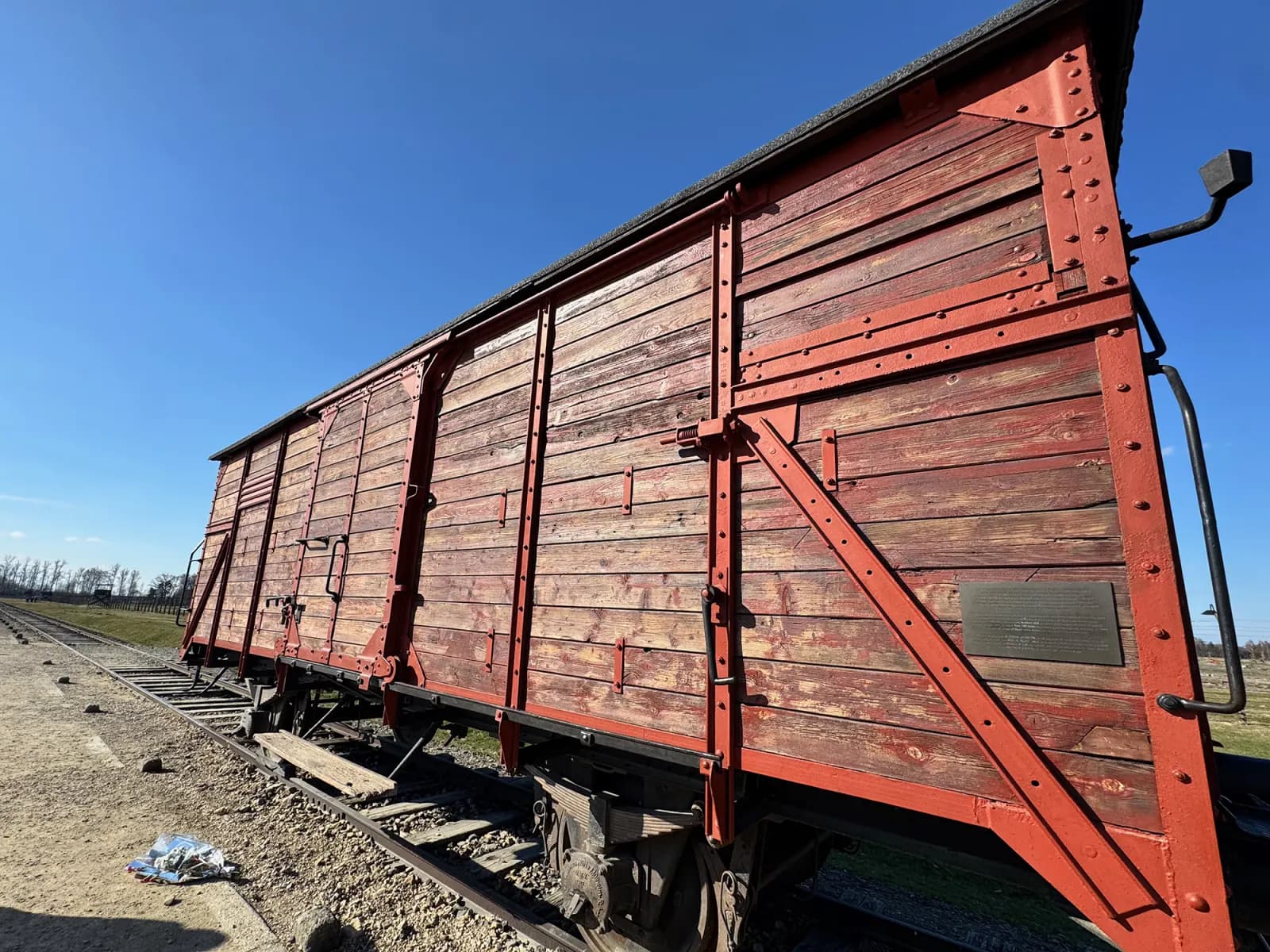
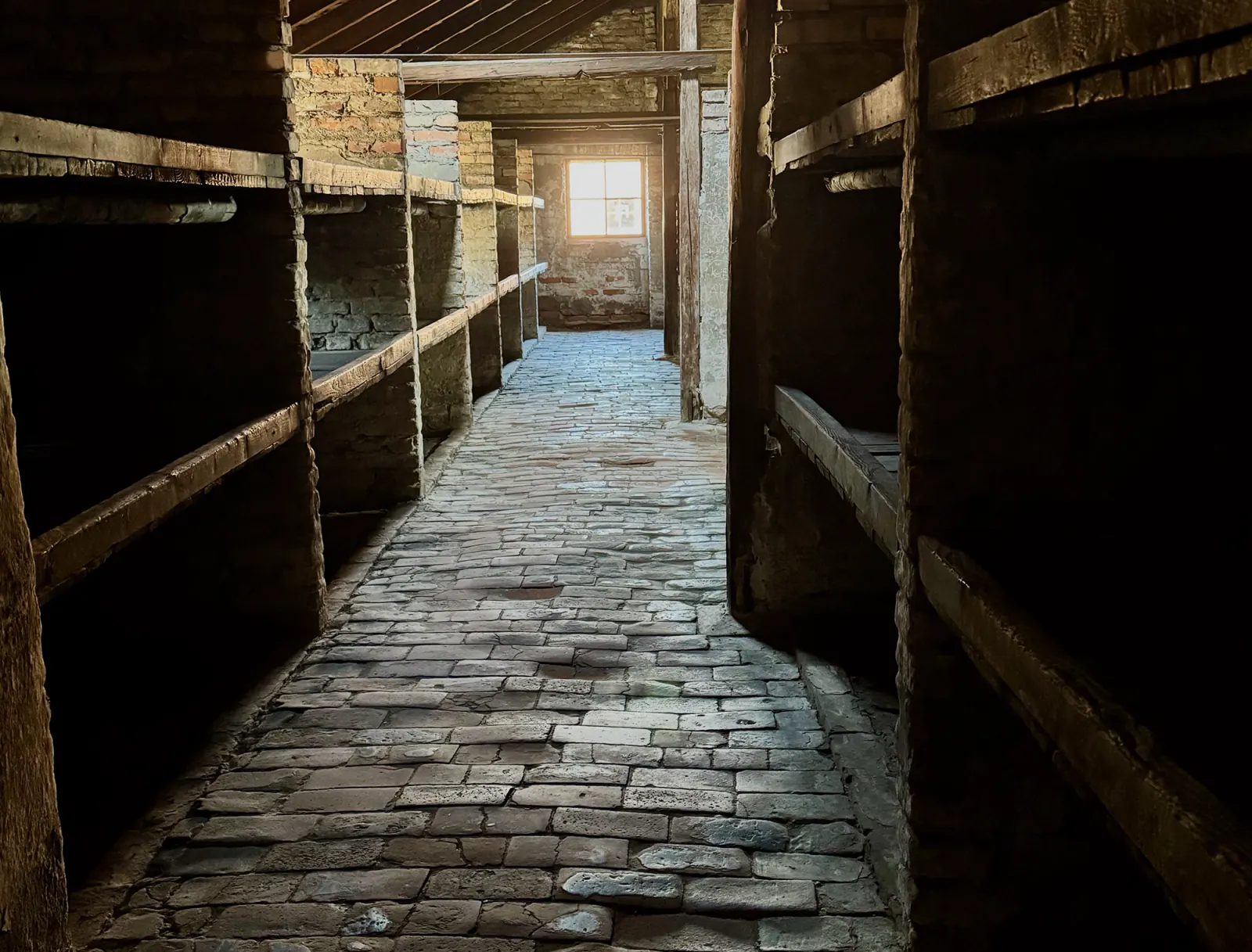
The site felt eerie. We walked between and in preserved brick blocks at Auschwitz I, through barracks at Auschwitz II-Birkenau, and past the remains of structures that no longer stand. A freight wagon on the railway line gave physical scale to the deportations. The crude tiers of wooden bunks made the overcrowded, inhumane conditions harder to imagine.
Inside the exhibitions, preserved belongings sat behind protective glass. I had seen shoes at the United States Holocaust Memorial Museum in Washington, D.C., but the piles here felt different: adult shoes, a separate pile of children’s shoes, and then the mound of human hair cut from people who were murdered in gas chambers. The scale was a physical shock. I felt sick as I listened to how people’s bodies and belongings were exploited.
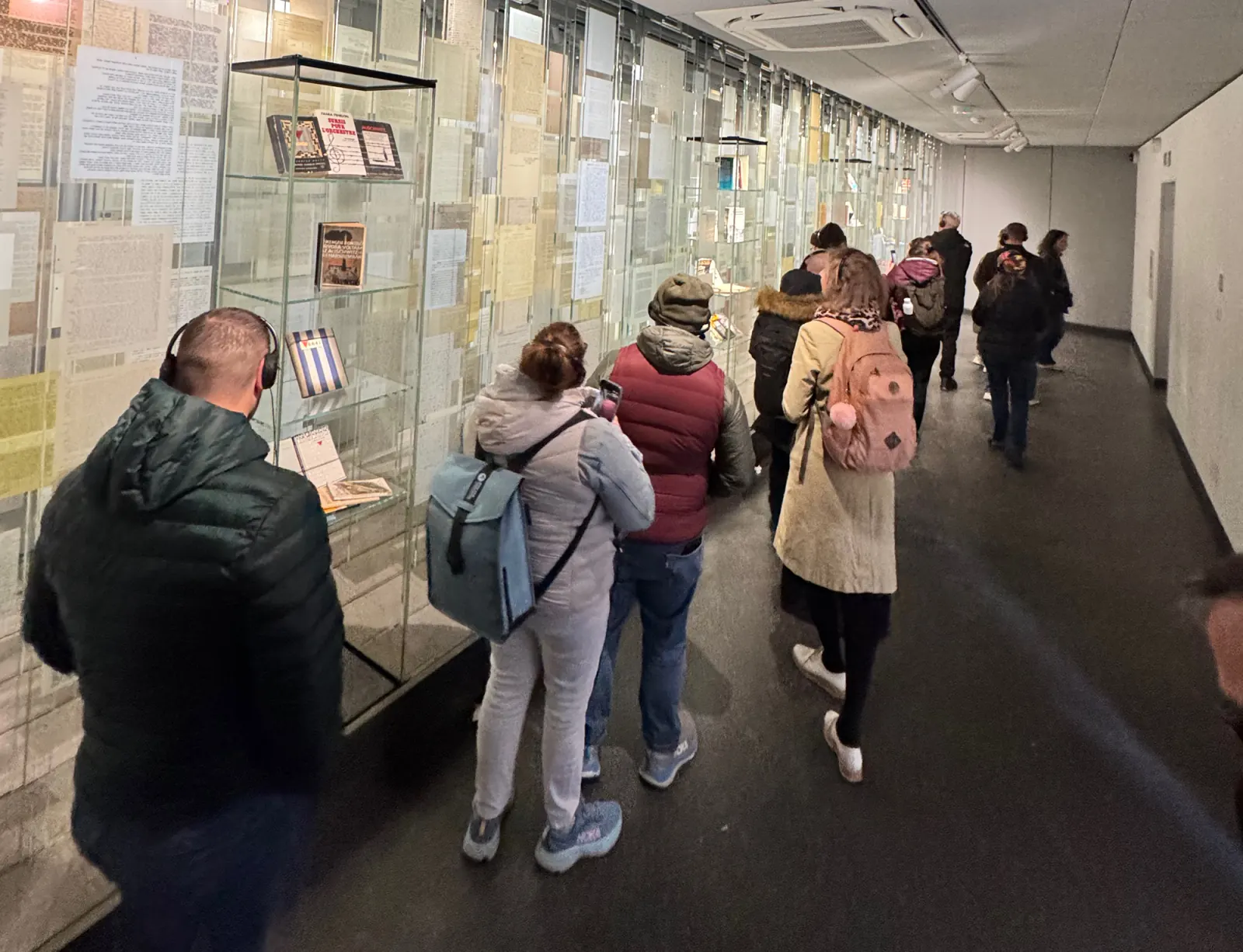
Books, films, documents, and museums in the United States can teach this history. Standing where it happened carries a much heavier weight. The records were attached to individual lives. The barracks, rails, ruins, and stolen belongings made the number of victims feel both impossibly large and painfully personal.
There was nothing enjoyable about the day, and enjoyment is not the measure of its importance. I left emotionally drained, sickened by what people had done to other human beings, and grateful that the evidence is being preserved. What I saw made the history impossible to hold at a distance. It also left me with a responsibility to remember accurately and share what I learned with care.